Do You Still Need a Cookie Consent Banner in 2026?
Whether you need a cookie consent banner depends on what your site does. If you set non-essential cookies or process personal data for tracking, like Google Analytics or ad pixels, then in the EU and UK you generally need a banner with prior opt-in. If you only use strictly necessary cookies and cookieless, privacy-friendly analytics, you generally do not need a banner for your analytics, though you may still need one for other things. This is general information, not legal advice.
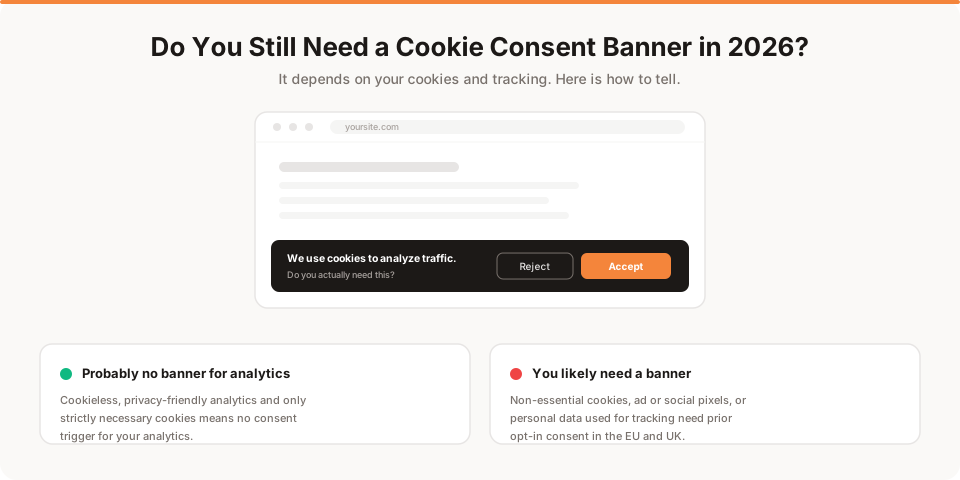
Short answer: it depends on what your site actually does. If you set non-essential cookies or process personal data to track people, for example Google Analytics, ad pixels, or embeds that drop cookies, then in the EU and UK you generally need a consent banner with prior opt-in. If you only use strictly necessary cookies and cookieless, privacy-friendly analytics, you generally do not need a banner for your analytics. This post walks through how to tell which case you're in. It is general information, not legal advice.
Cookie banners are the most annoying thing on the modern web, and half the time they don't even need to be there. A lot of founders add one out of habit, or because a template came with it, or because a friend said "you have to have one for GDPR." Sometimes that's right. Often it isn't.
So let's sort out the real answer for a small site in 2026: when a banner is genuinely required, when it isn't, and how the analytics tool you pick changes the answer.
First, the honest disclaimer
I'm the founder of Muro, a privacy-friendly analytics tool, and I'm not a lawyer. Nothing here is legal advice. This is a plain-English explanation of how the rules generally work, written to help you ask better questions, not to replace a professional. Privacy law varies by country, by industry, and by exactly what your site does. If you have any real doubt, or if you handle sensitive data, talk to a qualified lawyer about your specific situation. I'll say this again at the end, because it matters.
With that out of the way, here's the useful part.
So do you need a cookie banner or not?
It depends on two questions:
- Do you store or read non-essential information on the visitor's device? This mostly means non-essential cookies, but it also covers similar storage like localStorage used for tracking.
- Do you process personal data to track or profile people? Things like IP-based identifiers, cross-site tracking, or building a profile of a visitor.
If the answer to either is yes, then in the EU and UK you generally need consent before you do it, and consent in practice usually means a banner. If the answer to both is no, you generally don't need a banner for that activity.
Analytics is where this bites most sites, because the popular tools historically set cookies and processed personal data. But analytics doesn't have to work that way anymore, which is the whole point of the cookieless category.
Why do cookie banners exist in the first place?
In the EU, two things drive this, and it helps to keep them separate.
The ePrivacy Directive, often called "the cookie law," is the rule about storing or accessing information on someone's device. It says you generally need consent before setting non-essential cookies. Strictly necessary cookies, the ones without which the site literally can't work, like a login session or a shopping cart, are exempt. Analytics cookies are not considered strictly necessary, so historically they've needed consent.
The GDPR is the broader rule about processing personal data. If your tracking collects personal data, GDPR sets the standard for the consent you rely on. And that standard is specific: consent must be prior (you get it before you set the cookie, not after), informed (people know what they're agreeing to), and freely given (a real choice, not a wall they have to click through). A banner that sets cookies the moment the page loads, or where "Reject" is hidden three clicks deep, doesn't meet that bar.
Put simply: the banner exists to get prior opt-in consent for tracking that the law treats as intrusive. If your setup doesn't do anything intrusive, the reason for the banner starts to disappear.
Is the US different?
Yes, quite different. The US has no single federal cookie law. Instead it's mostly sector based (rules for health data, financial data, children, and so on) and increasingly state based. California's CCPA, as amended by the CPRA, is the big one, and several other states have passed their own laws.
The general US model leans toward opt-out rather than the EU's opt-in. Many US laws focus on giving people the ability to opt out of the "sale" or "sharing" of their personal information, often through a "Do Not Sell or Share My Personal Information" link, rather than requiring consent before anything loads. So a US-only audience usually faces a different set of obligations than an EU audience.
The practical takeaway for most founders: if you have EU or UK visitors at all, and you probably do, the stricter EU rules are the ones that shape whether you need a banner. If your audience is US-only, your requirements are real but different, and they vary by state. Either way, this is general information and not legal advice, and a lawyer can tell you which laws apply to you.
Cookies vs cookieless analytics: what actually triggers the banner
This is the part that most directly affects your decision, so it's worth being precise.
Cookie-based analytics (the classic model, including Google Analytics) works by dropping a cookie in the visitor's browser to recognize them across pages and visits, and often by collecting personal data like a full IP address or an advertising identifier. Both the cookie and the personal data processing are exactly what the consent rules are about. That's why a banner shows up.
Cookieless, privacy-friendly analytics is designed to avoid both. Instead of storing a cookie on the device and building a profile of a person, these tools count visits and events in aggregate and don't hold onto personal data in the GDPR sense. No cookie means the ePrivacy consent trigger generally doesn't fire. No personal data processing means the GDPR consent trigger generally doesn't fire either. So for analytics specifically, there's usually nothing that needs a banner.
That's the mechanism. It's not a loophole or a marketing angle. It's that the rules are triggered by cookies and personal data, and cookieless tools are built not to use either.
When you need a cookie banner vs when you probably do not
Here's the rough map. Treat it as a starting point for a conversation, not a compliance verdict.
| Your setup | Do you generally need a banner? | Why |
|---|---|---|
| Only strictly necessary cookies (login, cart, security) | Probably not | Strictly necessary cookies are exempt from consent |
| Cookieless, privacy-friendly analytics, nothing else non-essential | Probably not | No cookie and no personal data means no consent trigger for analytics |
| Google Analytics or other cookie-based analytics | Usually yes | Sets cookies and processes personal data, needs prior opt-in |
| Ad or retargeting pixels (Meta, Google Ads, LinkedIn) | Usually yes | Tracking cookies and personal data for advertising need consent |
| Third-party embeds that set cookies (default YouTube, some chat widgets, some maps) | Often yes | The embed drops cookies before consent, which needs opt-in |
| A/B testing or personalization tools that set cookies | Usually yes | Non-essential cookies plus profiling need consent |
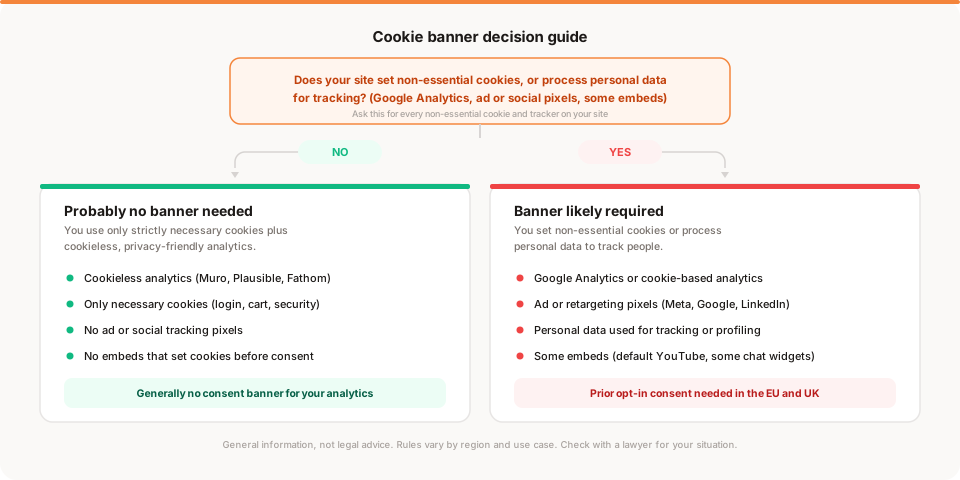
Notice the pattern. The banner question is about your whole site, not just your analytics. You can switch to cookieless analytics and remove that reason for a banner, and still need one because of an ad pixel or an embed. That's an honest and common situation, and it's worth saying plainly.
Do cookie banners actually cost you anything?
They do, in two ways that both matter for a small product.
They hurt the experience. A banner is the first thing a visitor sees, before your headline, before your product, before any reason to care. Most people have been trained to dismiss it as fast as possible. It's friction at the exact moment you want none.
They can reduce what you measure. When people reject or ignore a consent banner, you lose the ability to count them, so your analytics undercounts real traffic and conversions. The amount varies a lot by design and audience, so I won't quote a single number, but the direction is consistent: banners shrink both the experience and the data. A banner isn't a neutral formality. It's a cost you take on when the law genuinely requires it, and a cost worth avoiding when it doesn't.
How cookieless analytics removes the analytics reason for a banner
This is where the tool you choose does real work. If analytics is the only non-essential thing on your site, moving from cookie-based to cookieless analytics can take you from "needs a banner" to "doesn't need one for analytics."
Muro is built this way on purpose. It uses no cookies, collects aggregate data rather than personal profiles, and doesn't need a consent banner in most EU contexts for its analytics. The script is lightweight, and setup is about two minutes: one snippet in your page, and you're done. Instead of a dashboard you have to remember to open, Muro sends a short plain-English email every morning at 8 AM that summarizes your visitors, signups, top sources, top pages, and how the numbers moved versus before. There's a full dashboard too when you want to dig in. It also tracks short links you share on muro.ink right inside that same brief, so campaign clicks show up next to your site traffic.
To be clear about what this does and doesn't get you: Muro summarizes your own traffic in plain language. It removes the analytics reason for a consent banner. It does not remove a reason that comes from somewhere else on your site. If you run ad pixels or cookie-based embeds, you may still need a banner for those, and Muro won't change that. I'd rather be straight about the boundary than oversell it.
Other privacy-friendly tools take the same cookieless approach, and I've written an honest roundup of them in the best privacy-friendly analytics tools in 2026. The category, not just one product, is what removes the analytics banner.
Where a banner might still be needed
Switching to cookieless analytics is often the single biggest step toward dropping the banner, but it's rarely the whole story. You may still need a consent banner if your site does any of the following:
- Runs advertising or retargeting pixels from Meta, Google Ads, LinkedIn, TikTok, and similar.
- Embeds third-party content that sets cookies before consent, like the default YouTube player, some chat widgets, or some maps.
- Uses A/B testing, heatmap, or personalization tools that set non-essential cookies.
- Processes personal data for tracking or profiling through any other tool.
If any of these apply, the right move isn't to skip the banner. It's to figure out, ideally with a lawyer, what genuinely needs consent, get proper prior opt-in for those, and drop everything you don't actually need. Fewer trackers means a simpler site and, often, no banner at all.
If you're on Google Analytics and this is why you have a banner, my guide on whether Google Analytics is GDPR compliant goes deeper, and how to migrate from Google Analytics 4 walks through the switch step by step.
A 30-second self-check
Run through this quickly:
- List every non-essential cookie and tracker on your site. Analytics, ads, embeds, testing tools, chat widgets.
- For each one, ask: does it set a non-essential cookie, or process personal data for tracking? If yes, it's a banner reason.
- Remove what you don't need. A lot of sites carry trackers nobody uses anymore.
- For analytics, consider a cookieless tool so it stops being a banner reason at all.
- If anything is left that genuinely needs consent, use a proper prior opt-in banner for those, and confirm the details with a lawyer.
Most small sites that do this end up in one of two places: a much smaller banner burden, or no banner at all.
The bottom line
Do you still need a cookie consent banner in 2026? It depends on your site. If you set non-essential cookies or process personal data for tracking, then in the EU and UK you generally need one with prior opt-in. If you only use strictly necessary cookies and cookieless, privacy-friendly analytics, you generally don't need one for your analytics, though you might still need one for other trackers.
The good news is that a big chunk of the banner problem is self-inflicted, and fixable. Analytics is often the main reason a small site has a banner, and it's the easiest reason to remove. Choose a cookieless tool, clean up the trackers you don't use, and get real consent for anything that truly needs it.
One more time, because it's important: I'm not a lawyer, and this is general information, not legal advice. Privacy rules differ by country and by what your site does. For your specific situation, especially if you handle sensitive data or aren't sure which laws apply, talk to a qualified lawyer.
If cutting the analytics reason for a banner sounds appealing, try Muro free for 30 days. No credit card, about a two-minute setup, cookieless by design, and your first morning brief lands the next day. Fewer banners, less noise, and a short email that tells you what your numbers did while you slept.
Sanjeeva, founder of Muro